What Does "Resident-Owned Community" Actually Mean?
By Darlene Cutter, REALTOR® | Continental Country Club, Wildwood, FL
When buyers start looking at 55+ communities in Florida, they quickly run into a term that sounds straightforward but carries significant financial implications: resident-owned community.
It shows up in listing descriptions, community websites, and real estate brochures. And it gets used loosely — sometimes correctly, sometimes not. I've had buyers think they were moving into a resident-owned community and discover mid-transaction that the arrangement was quite different from what they expected.
This article is here to clear that up. Because if you're considering a move to a 55+ community in Central Florida — especially Continental Country Club — understanding this distinction could be one of the most important things you learn before you buy.
Two Types of 55+ Communities: The Fundamental Difference
Florida has approximately 2,400 manufactured home communities and 55+ communities. They fall into two fundamentally different ownership structures, and the difference is not subtle.
Type 1: Land-Lease Communities
In a land-lease community, you buy the home but you lease the land it sits on from a park owner or management company. Every month, you pay lot rent — essentially a rental fee for the ground beneath your feet.
In land-lease manufactured home communities, residents own their homes but rent the land on which the home sits. Depending on the community, these fees can range from $300 to $1,000 per month.
Lot rent is separate from any community fees, utilities, or amenities charges. It goes to whoever owns the land — which is not you.
This is the most common structure in Florida's 55+ market. Most of the communities you'll see advertised with low home prices operate on a land-lease basis. The low entry price is real — but it comes with a monthly obligation that never builds equity and is subject to increases.
Type 2: Resident-Owned Communities (Fee Simple)
In a resident-owned community, you buy the home and the land beneath it as a single real estate transaction. This is called fee simple ownership — the same type of ownership you'd have buying a house in a traditional neighborhood.
Your deed covers both the structure and the lot. You pay property taxes on your real property. You build equity in the land as well as the home. And your ongoing community expenses are paid to a homeowners association that you and your neighbors collectively govern — not to an outside corporate landlord.
This is what Continental Country Club is. When you buy a home here, you own it — all of it, home and land — and you collectively own the club, the golf course, the pool, the restaurant, and every other amenity with your 963 fellow homeowners.
Why the Distinction Matters: The Case of the Rising Lot Rent
The financial difference between these two structures is easy to understand in the abstract. But the real-world consequences have become increasingly visible across Florida in recent years — and they are serious enough that I believe every buyer considering a land-lease community deserves to understand them before signing anything.
Here's what has been happening.
Large investment firms and private equity companies have been acquiring mobile home parks and 55+ land-lease communities across Florida at a rapid pace. The business model is straightforward: buy the land, then raise the lot rents. The residents own their homes but have nowhere to go — moving a manufactured home is expensive, disruptive, and often not feasible for a 70-year-old on a fixed income.
Mobile home residents in Central Florida say they're being priced out of what was supposed to be an affordable place to live. Residents point to a growing trend of large corporations purchasing mobile home parks and implementing aggressive rent increases. The business model particularly affects residents who own their homes but lease the land underneath, leaving them vulnerable to rising costs with limited options for relocation.
The stories are not abstract. In one documented case, a resident paying $480 per month in lot rent was notified that her rent would nearly double to $850 per month in a matter of months. She had owned her home for years and had nowhere to go.
Florida lawmakers considered sweeping legislation in 2026 that would require mobile home park owners to justify rent increases and boost relocation assistance for displaced residents, potentially affecting more than 800,000 mobile home residents across the state.
That legislation was a response to a real and growing problem. Florida has no statewide rent cap on lot rent in land-lease communities. Whatever protections exist are limited. And the corporate consolidation of Florida's mobile home parks shows no sign of slowing.
What Resident Ownership Actually Protects You From
When you own your land fee-simple in Continental Country Club, none of the land-lease scenario above applies to you. Here's what changes:
No landlord. There is no outside owner of the land who can raise your costs arbitrarily. Your HOA fee is set by a board elected from among the residents — your neighbors — based on the actual costs of running the community.
No displacement risk. No corporation can buy the land out from under you. The land is yours. The community is collectively owned by its residents. It cannot be sold to an outside investor without the residents' agreement.
Equity accumulation. When you own land, you own something that appreciates. A home in a land-lease community sits on land you don't own — which limits how its value is perceived by lenders and buyers alike. A fee-simple home in Continental Country Club is real property in the full sense: deeded real estate that you can finance conventionally, sell, will to your heirs, and watch appreciate over time.
Mortgage eligibility. Conventional mortgage financing is more readily available for fee-simple properties than for manufactured homes on leased land, which often require specialty chattel loans with less favorable terms.
HOA governance, not corporate management. Continental Country Club is governed by its residents. When you disagree with a community decision, you can attend the meeting, vote in the election, or run for the board yourself. In a land-lease community managed by a corporate entity, the governance structure is fundamentally different — the land owner's financial interests and the residents' quality-of-life interests are not always aligned.
The HOA Fee Comparison: What You're Actually Paying For
This is where buyers from the Northeast sometimes get confused. Continental Country Club's HOA fee is approximately $361 per month. On its face, that seems like a lot. But let's compare it to what a land-lease community resident actually pays.
In a comparable Florida land-lease community, a resident might pay:
| Cost | Land-Lease Community | Continental Country Club |
|---|---|---|
| Lot rent (to land owner) | $400–$900/month | $0 (you own the land) |
| Community/amenity fee | $50–$200/month | Included in HOA |
| Championship golf access | Not typically included | Included in HOA |
| Pool, fitness, recreation | Sometimes included | Included in HOA |
| 24-hour security/gate | Sometimes included | Included in HOA |
| Total monthly community costs | $450–$1,100+ | ~$361 |
And critically: the $361 you pay at Continental Country Club builds into the value of real property you own. The $400–$900 in lot rent you'd pay in a land-lease community builds nothing. It is a cost of occupancy, not of ownership.
What Collective Ownership of the Club Means
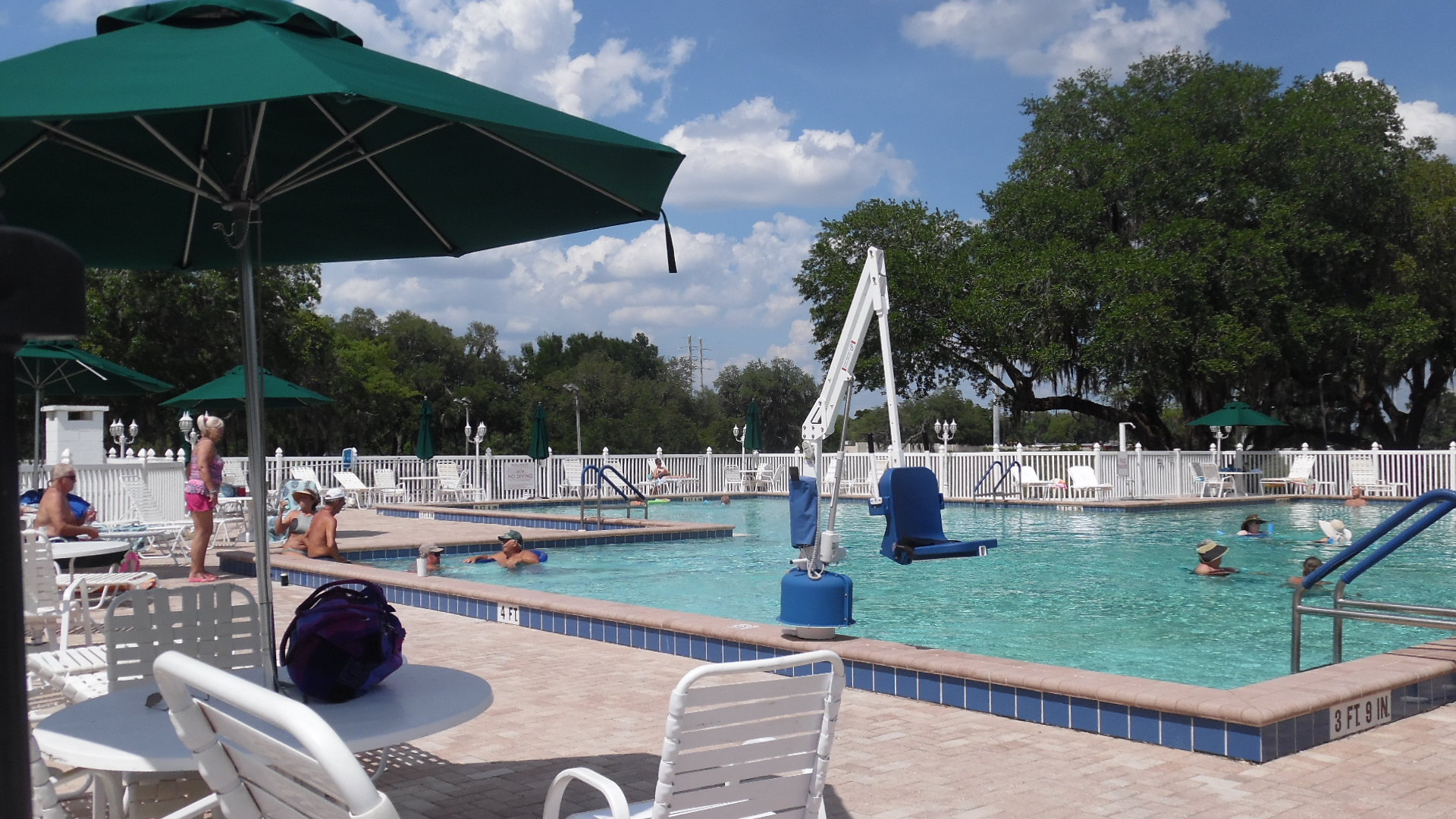
Continental Country Club takes resident ownership one step further than simply owning your lot. The community is structured so that residents collectively own the club itself — the 18-hole championship golf course, the pro shop, the Olympic-size pool, the restaurant and lounge, the fitness center, the arts and crafts buildings, the tennis and pickleball courts, and every other shared amenity.
This matters for two reasons.
First, it means the club's financial interests and the residents' interests are identical. When the board makes decisions about maintenance, improvements, or fee adjustments, they are making decisions that affect their own community — not decisions that balance a corporate return against resident wellbeing.
Second, it means the amenities cannot be sold or eliminated by an outside decision-maker. The golf course is yours. The pool is yours. The restaurant is yours. As long as the community decides to keep them, they remain.
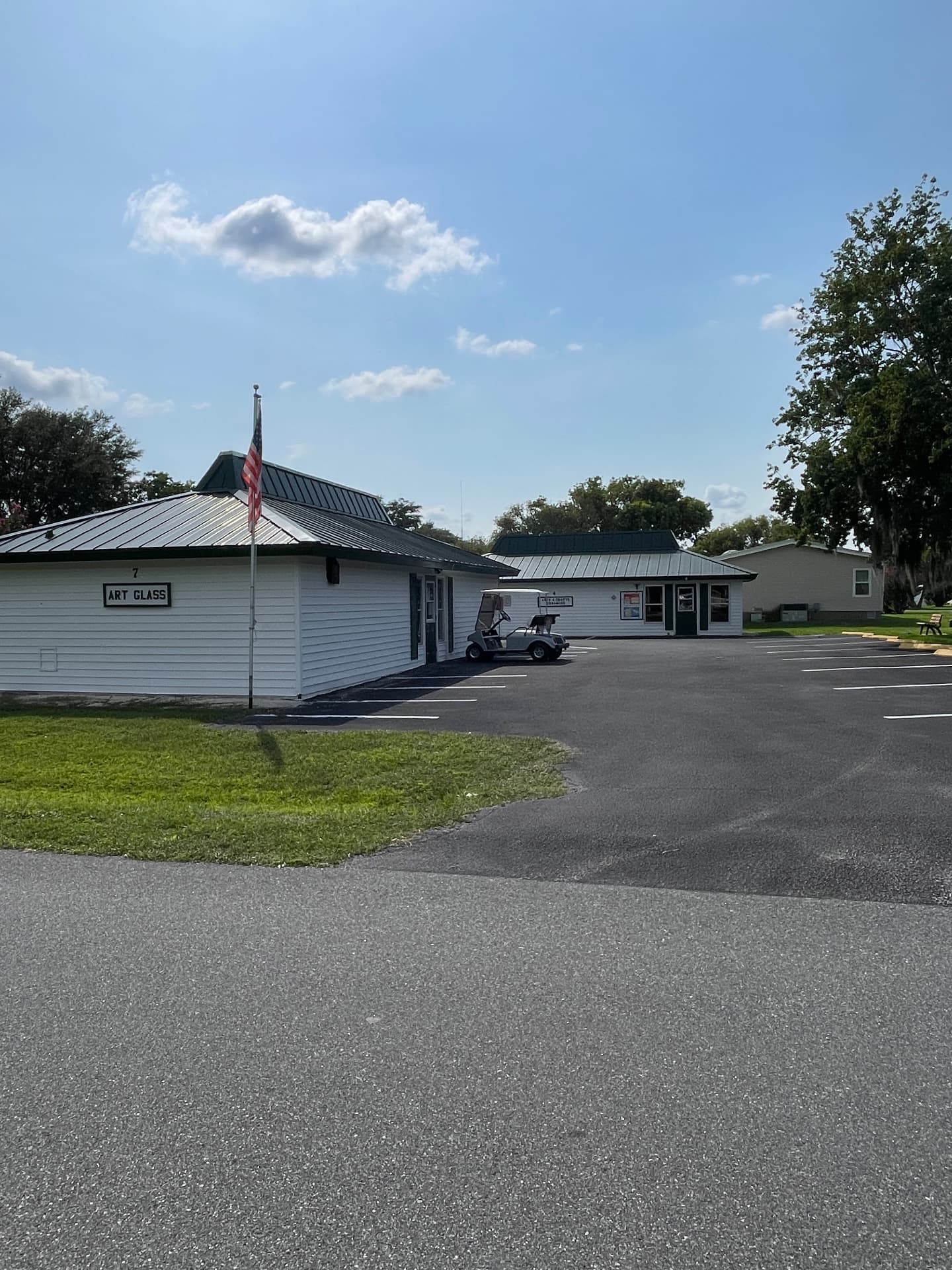
The arts and crafts buildings, the woodworking shop, the ceramics studio, the stained glass facility — these exist because residents wanted them and built them into the fabric of their community. That is what resident ownership actually looks like in practice.
A Practical Checklist for Buyers Evaluating Any 55+ Community
Before you fall in love with a community, ask these questions:
- Do I own the land, or am I leasing it? Ask for the deed structure explicitly. "Fee simple" means you own the land. "Land lease" or "lot rent" means you don't.
- Who owns the community's amenities? In a resident-owned community like CCC, the residents own them. In a land-lease community, the park owner typically does.
- Who sets the lot rent, and what are the protections against increases? Get this in writing. Understand what notice you'd receive and what recourse you'd have.
- Who owns the management company? If the answer is a private equity firm or large corporate entity, understand what their business model is and what your rights are if they decide to sell.
- Can the community be converted or redeveloped? In a land-lease community, the land owner retains development rights. Ask explicitly.
- What does the HOA or community fee actually cover? Get a full breakdown so you can compare apples to apples.
The Bottom Line
"Resident-owned" is not a marketing phrase at Continental Country Club. It is a legal and financial reality that shapes every aspect of life here — from who sets the budget to who controls the golf course to what happens when a new neighbor moves in.
For buyers coming from New York, New Jersey, or Pennsylvania — people who have spent decades building equity in real property — the idea of owning a home but not the land beneath it often feels immediately wrong. That instinct is sound. Homeownership in the full sense means owning the land.
At Continental Country Club, you do.
Have questions about how ownership works at CCC, or want to see homes that are currently available? Email me at darlenecutter@darlenecutter.com or call 814-720-5356. I live here, and I'm happy to walk you through every detail.
Darlene Cutter is a REALTOR® and 15-year Continental Country Club resident with 30+ years of real estate experience in Sumter County, Florida. Licensed under Four Star Home Brokers Inc. (License #SL3105424).
Explore more: Search homes in Continental Country Club | Learn about CCC's amenities | Contact Darlene
Frequently asked questions about resident-owned communities
What is a resident-owned community in Florida?
A resident-owned community is one where homeowners own both their home and the land beneath it as deeded real property — called fee simple ownership. This is different from a land-lease community, where residents own their home but rent the land from a park owner, typically paying $400–$900 per month in lot rent.
What is lot rent in a 55+ community?
Lot rent is the monthly fee paid to a land owner for the right to place your home on their property in a land-lease community. It is not equity — it does not build ownership in the land, and it can be increased by the park owner with proper notice. Lot rent in Florida 55+ communities typically ranges from $400 to $900+ per month.
Is Continental Country Club a resident-owned community?
Yes. Continental Country Club is a fee-simple, resident-owned community. Homeowners own both their home and the land beneath it. Additionally, residents collectively own the club's amenities — including the 18-hole championship golf course, pool, restaurant, and recreation facilities.
What are the risks of a land-lease community?
In a land-lease community, the park owner can raise lot rent, and residents have limited recourse if the land is sold to a new owner — including corporate investors who may implement significant rent increases. Florida has no statewide cap on lot rent increases, making land-lease residents vulnerable to displacement if costs become unaffordable.
Can I get a conventional mortgage on a home in Continental Country Club?
Yes. Because Continental Country Club homes are fee-simple real property — you own both the home and the land — conventional mortgage financing is available. Homes in land-lease communities often require specialty chattel loans with less favorable terms.
Who governs Continental Country Club?
Continental Country Club is governed by a resident-elected board of directors. Because residents collectively own the community, the board's financial interests and the residents' quality-of-life interests are aligned. There is no outside corporate owner or management company making decisions that affect residents' costs.